
JENNIE Closes Her Three-Month Festival Run With an Emotional Osaka Speech
After three months of flights, rehearsals, changing stages and increasingly confident performances, JENNIE brought her 2026 summer festival run to an emotional close at SUMMER SONIC Osaka.
 HGPPublished 17 Aug 2026·14 min read 58 views
Blackpink-Fansite
After three months of flights, rehearsals, changing stages and increasingly confident performances, JENNIE brought her 2026 summer festival run to an emotional close at S
After three months of flights, rehearsals, changing stages and increasingly confident performances, JENNIE brought her 2026 summer festival run to an emotional close at SUMMER SONIC Osaka. Her final words transformed the end of another concert into something much more personal: the conclusion of a defining chapter in her solo career.
On August 16, JENNIE stepped onto the AIR STAGE at SUMMER SONIC Osaka for the final performance of a festival journey that had carried her across the United States, Europe and Japan.
By the time she reached Osaka, this was no longer simply another booking on an already impressive schedule.
It was the final night of a three-month run during which JENNIE repeatedly walked onto stages built for mixed audiences—not only dedicated BLINKs—and presented herself as a complete solo festival artist.
At the end of the performance, she paused to address the crowd and reflect on the journey she had just completed. The emotion of the moment was visible as she spoke about spending the previous three months travelling and performing at festivals around the world.
Her Osaka speech felt like a release after weeks of pressure, movement and expectation. It was also a reminder of how much this festival run appears to have meant to her personally.
For BLINKs who followed every performance, outfit, setlist change and viral moment, Osaka was not merely the final date.
It was the closing scene of JENNIE’s festival summer.
Osaka marked the end of an extraordinary journey
JENNIE performed twice at the 25th-anniversary edition of SUMMER SONIC, appearing in Tokyo on August 14 before bringing her show to Osaka on August 16.
The Japanese festival was the final destination in a summer itinerary that began in New York in early June and continued through Denmark, Poland, Spain and Chicago.
Across that period, JENNIE delivered seven major performances at six different festivals:
- Governors Ball in New York — June 7
- Roskilde Festival in Denmark — July 3
- Open’er Festival in Poland — July 4
- Mad Cool Festival in Spain — July 9
- Lollapalooza Chicago — August 1
- SUMMER SONIC Tokyo — August 14
- SUMMER SONIC Osaka — August 16
The dates reveal how demanding the run actually was.
JENNIE moved from North America to Europe, performed at Roskilde and Open’er on consecutive days in different countries, continued to Madrid, returned to the United States for Lollapalooza and eventually travelled to Japan for two final SUMMER SONIC appearances.
Behind every hour onstage were international flights, rehearsals, soundchecks, costume preparations and the physical demands of delivering choreography-heavy sets.
That context made her final Osaka speech even more meaningful.
Governors Ball opened JENNIE’s festival summer in New York
JENNIE officially began this three-month run at Governors Ball in New York on June 7.
Ahead of the show, she described the festival as the perfect way to begin her summer season. She wanted the performance to feel like one large summer party, driven by movement, freedom and the particular energy of a New York audience.
The result was a 60-minute set built around her identity as a solo artist.
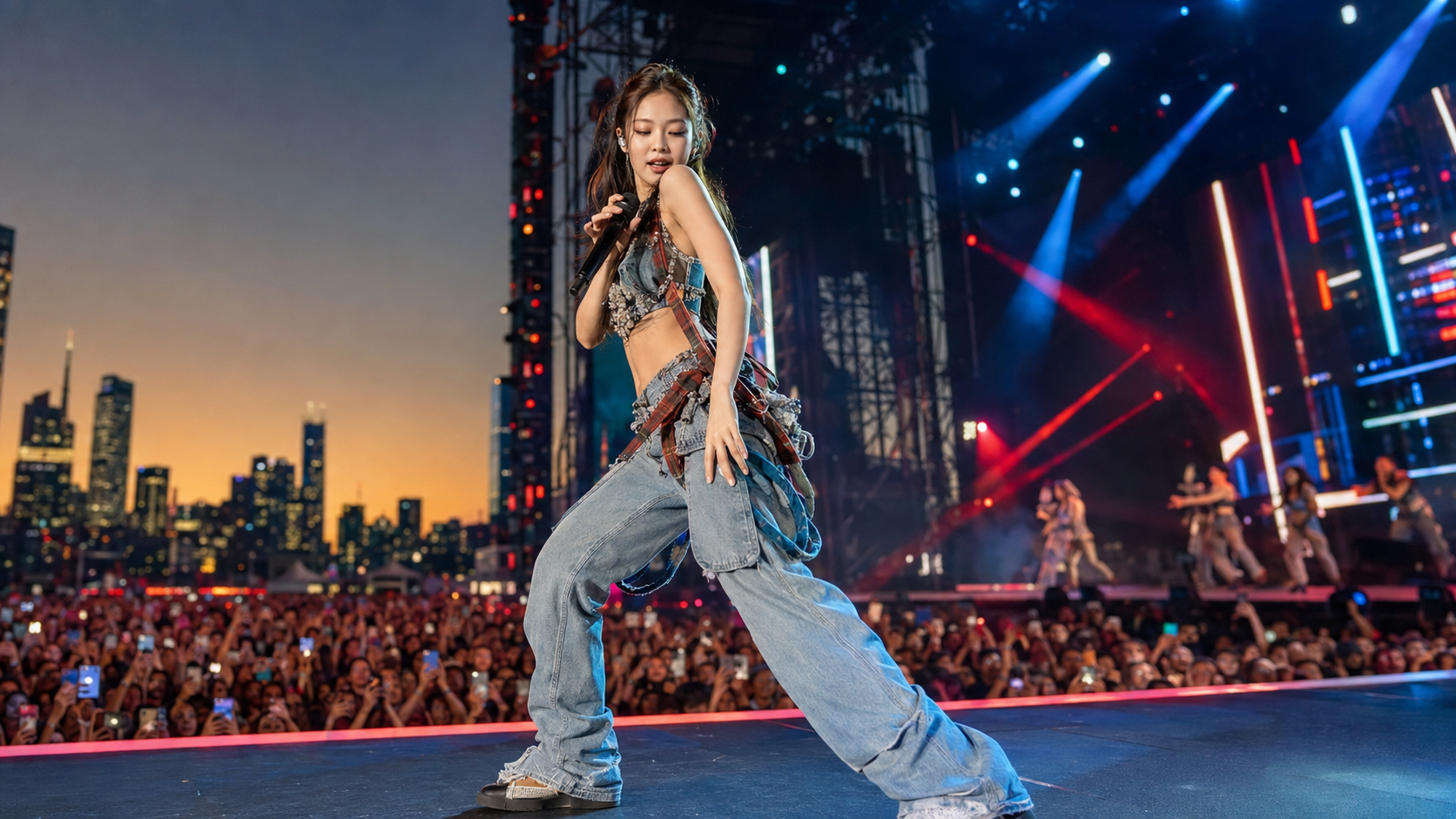
Songs including “Filter,” “Damn Right,” “Mantra” and “Handlebars” demonstrated the different sides of Ruby, while “like JENNIE” provided the kind of explosive finale designed for a festival crowd.
The show also included new material. JENNIE introduced the unreleased song “Lock It Down,” immediately giving the festival run its first major surprise.
Her Governors Ball fashion similarly reflected the location. Working with A$AP Rocky’s AWGE, she wore a custom look influenced by New York street style, combining denim, plaid, crystals and a New York cap.
This was JENNIE entering the summer with something to prove.
She was no longer performing a short promotional set or appearing as one member of BLACKPINK. She was responsible for carrying an entire festival performance under her own name.
New York established the foundation. The following dates showed how quickly the production could grow.
Roskilde placed JENNIE in front of a historic festival audience
On July 3, JENNIE arrived at Denmark’s Roskilde Festival, one of Europe’s longest-running and most culturally significant music events.
Her appearance carried historical weight. JENNIE became the first Korean solo artist to headline the Danish festival, placing a K-pop performer at the centre of a space traditionally associated with rock, alternative music and a broad international lineup.
This was precisely why the booking mattered.
Unlike a concert filled almost entirely with existing fans, a festival introduces an artist to thousands of people with different musical backgrounds. Some attendees may know every lyric, while others may be witnessing the artist for the first time.
JENNIE’s task was to make the performance work for both audiences.
Her Roskilde appearance demonstrated that the music from Ruby could exist beyond the visual and promotional world surrounding its release. The tracks had to communicate through live vocals, choreography, staging and presence.
The performance also carried a charitable dimension, with reports indicating that JENNIE donated her Roskilde performance fee in line with the festival’s nonprofit tradition.
It added another layer to a show that was already significant for her development as a global solo performer.
From Denmark to Poland in just one day
Less than 24 hours after Roskilde, JENNIE was due onstage again—this time at Open’er Festival in Gdynia, Poland.
Open’er officially announced her as the Saturday headliner of its Orange Main Stage, placing her alongside a wider 2026 lineup featuring artists such as The Cure, Calvin Harris, Nick Cave & The Bad Seeds, Florence + The Machine, The xx and David Byrne.
The booking represented another milestone.
JENNIE was not added as a novelty or limited K-pop attraction. She was positioned prominently within one of Eastern Europe’s largest music festivals and trusted to carry its main stage.
The demanding Roskilde-to-Open’er sequence also revealed the less glamorous reality behind a festival run.
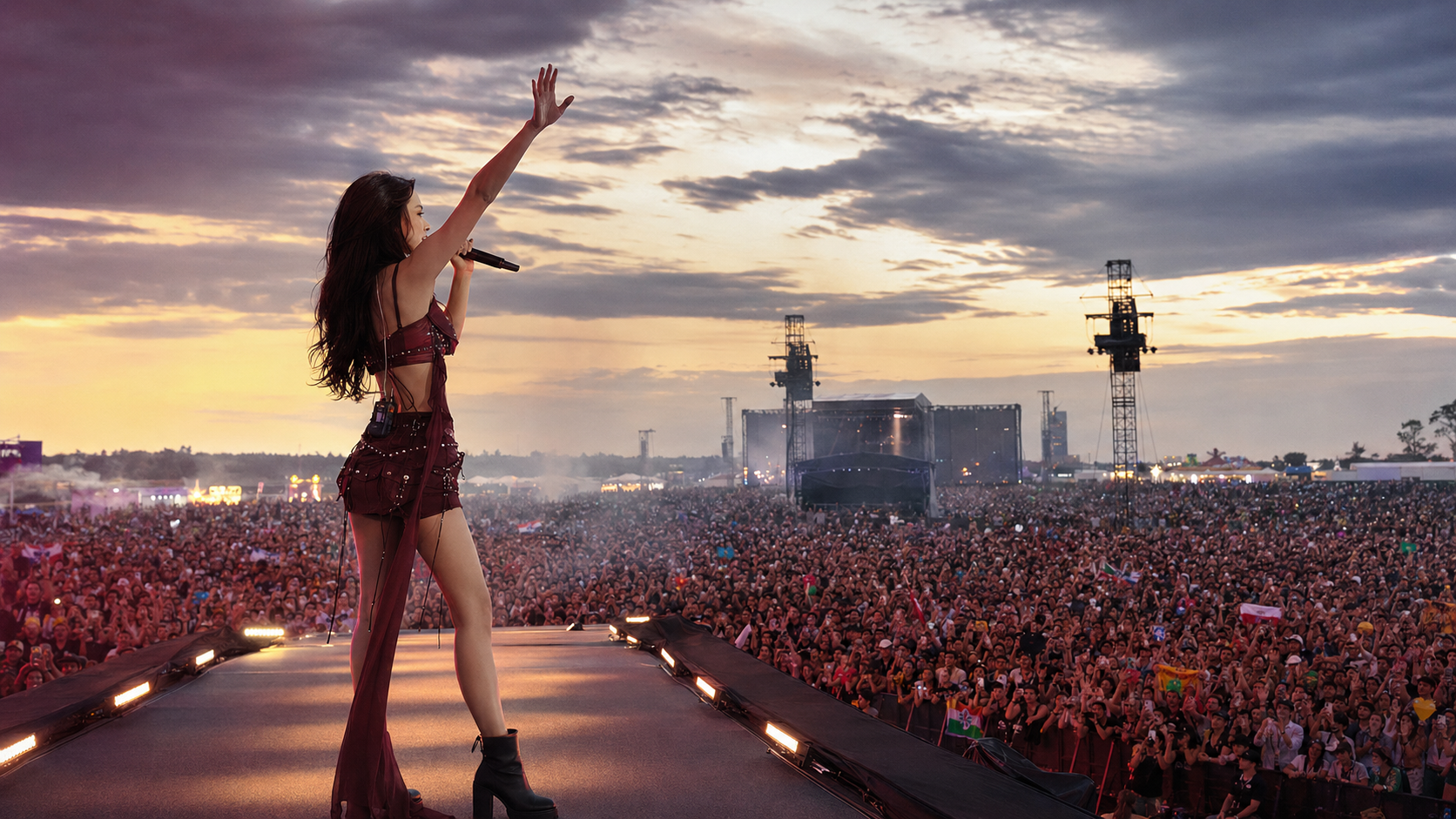
There was almost no recovery time between the two performances. JENNIE and her team had to move between countries, adapt to a new stage and prepare for another large audience immediately.
Even so, the Open’er performance continued the momentum of the summer and reinforced the idea that JENNIE’s solo show could travel successfully between very different festival environments.
Mad Cool brought the Ruby era to Madrid
The European chapter continued at Mad Cool Festival in Madrid on July 9.
By this point, JENNIE’s festival production had become more than a fixed collection of songs. Each appearance allowed her to test pacing, refine transitions and observe how different audiences responded to the contrasting moods of Ruby.
The album was designed around multiple sides of her identity.
There is the direct confidence of “Mantra” and “like JENNIE,” the more intimate and vulnerable moments of the record, and the theatrical structure that frames JENNIE as the central character of her own story.
A festival set has less time to communicate that concept than a traditional solo concert. Every transition must be immediate, and every quieter moment must retain the attention of a large outdoor audience.
Madrid gave JENNIE another opportunity to strengthen that balance.
It also became part of a particularly active period around her music, as sightings and speculation connected to the visual production of “Less than a Lover” circulated during her time in Spain.
The European run was no longer simply proving that she could appear at major festivals. It was showing that she could build a continuous solo era around them.
Lollapalooza became one of the summer’s biggest statements
JENNIE returned to the United States for Lollapalooza Chicago, performing at Grant Park on August 1.
Lollapalooza represented one of the most visible stages of the entire run.
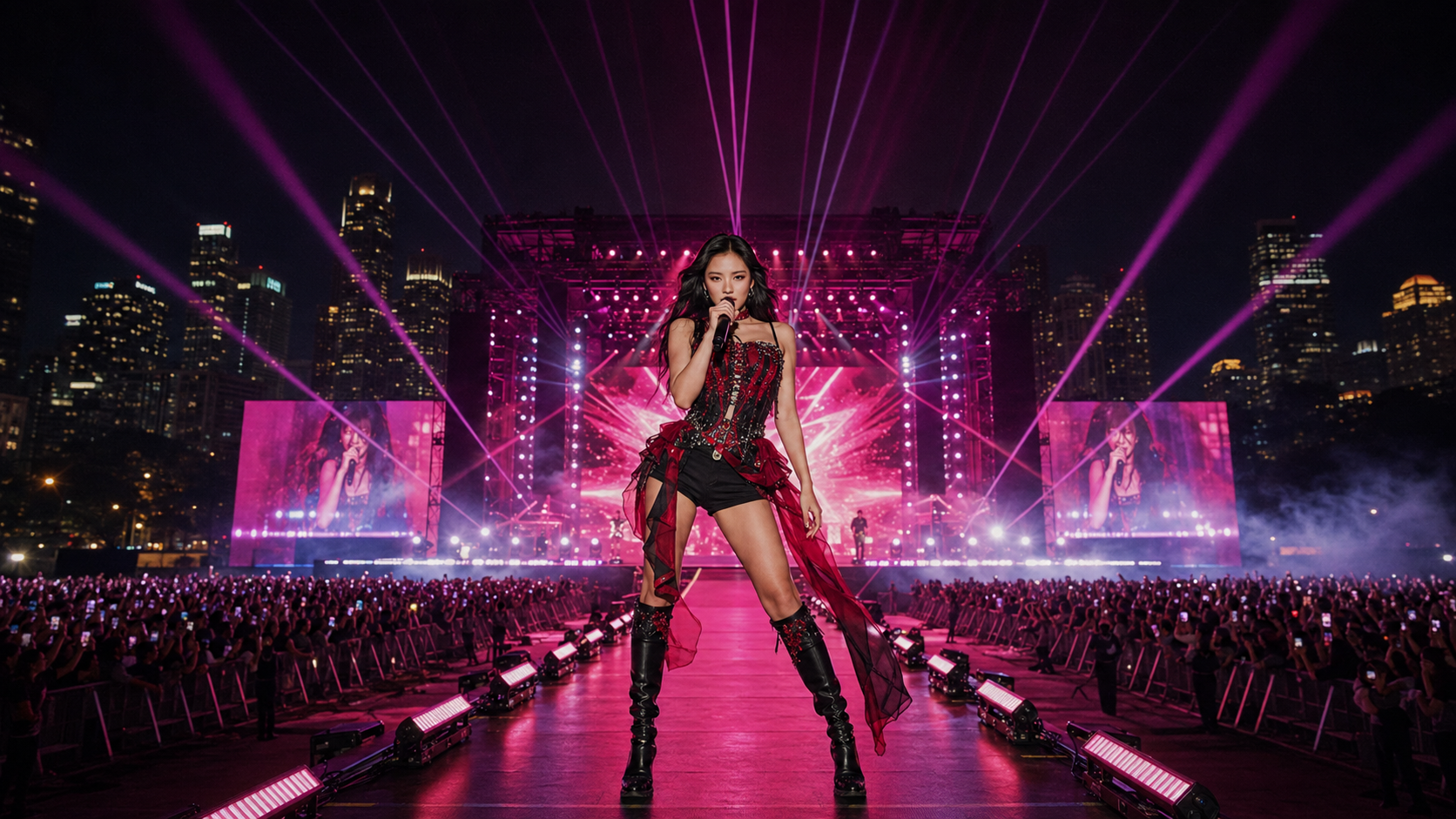
The festival attracts a vast international audience both on-site and online, and its performances frequently generate viral moments far beyond the people watching in Chicago.
For JENNIE, the show arrived after nearly two months of performing the material in different countries.
The difference was visible.
The artist who opened the festival season in New York had gained greater control over the production. Her movements, crowd interactions and transitions carried the confidence of someone who had repeated the show under multiple conditions without allowing it to feel routine.
The songs had also developed new lives through fan chants, performance clips and discussions surrounding her vocals, styling and stage presence.
Lollapalooza was therefore more than another stop. It felt like the culmination of everything JENNIE had learned in New York and Europe before taking the show to Japan.
SUMMER SONIC brought JENNIE back to Japan as a solo artist
SUMMER SONIC held particular meaning because it marked JENNIE’s first solo appearance at the festival and her first solo performances in Japan following the release of Ruby.
The 2026 edition also celebrated SUMMER SONIC’s 25th anniversary, expanding to three days across Tokyo and Osaka.
JENNIE was presented as one of the festival’s major international special guests alongside a diverse lineup that included The Strokes, L’Arc-en-Ciel, Jamiroquai, David Byrne, FKA twigs and other global acts.
Her first performance took place in Tokyo on August 14.
Although the show encountered a brief wardrobe issue, JENNIE handled the interruption directly, apologised to the audience and continued the performance. Rather than defining the night, the moment highlighted her professionalism and ability to retain control when a live production did not go exactly as planned.
Two days later, she arrived in Osaka for the final date.
This time, the emotional weight came not from an unexpected technical moment, but from the realisation that the journey was ending.
Why JENNIE’s Osaka speech resonated with BLINKs
JENNIE’s final comments resonated because the audience understood what stood behind them.
For three months, fans had watched her travel between continents while carrying the expectations attached to being both JENNIE of BLACKPINK and JENNIE the solo artist.
Every festival created a new discussion.
There were conversations about live vocals, choreography, outfits, setlists, unreleased music and the challenge of adapting her performance to audiences outside the traditional K-pop concert structure.
There were triumphant moments and moments when she had to adjust in real time.
Osaka allowed all of those experiences to meet in one place.
When JENNIE reflected on the months she had spent performing at festivals, her words did not sound like a standard closing message delivered at the end of another show. They sounded like someone finally permitting herself to recognise how far she had travelled.
That vulnerability is part of why the moment spread so quickly among BLINKs.
JENNIE is frequently presented through the language of confidence, luxury and cultural influence. Her Osaka speech revealed the person behind that image: an artist who had worked through an exhausting schedule and was visibly moved to have reached the end.
This was bigger than a festival schedule
The significance of this run cannot be measured only by the number of cities visited.
JENNIE spent the summer establishing a solo performance identity in spaces that were not built exclusively around her existing fandom.
She appeared on lineups spanning pop, hip-hop, rock, alternative music and global festival culture. She performed alongside artists from entirely different musical worlds and repeatedly introduced Ruby to mixed crowds.
That distinction matters.
A successful album proves that listeners are interested in the music. A successful festival run proves that the artist can transform that music into a live experience capable of holding a large and unpredictable audience.
Across Governors Ball, Roskilde, Open’er, Mad Cool, Lollapalooza and SUMMER SONIC, JENNIE demonstrated that her solo catalogue could support a substantial international show.
She also proved that her name carries weight independently on some of the world’s most competitive festival lineups.
From Ruby to a new stage in JENNIE’s career
The festival run began as an extension of the Ruby era, but it may ultimately be remembered as the bridge toward whatever JENNIE creates next.
New and unreleased music entered the set. Performances evolved. The relationship between JENNIE and her solo audience became more direct with every stop.
The experience could also shape a future solo tour.
By performing in different markets, JENNIE and her team gained valuable information about which songs created the strongest crowd reactions, where demand was most visible and how the production worked across multiple stage configurations.
Nothing about a future solo tour has been officially confirmed, but the summer demonstrated that the foundation already exists.
JENNIE now has the catalogue, the audience and the live experience required to build something even larger.
Osaka was an ending—and a beginning
When JENNIE left the stage in Osaka, she closed one of the most intense solo chapters of her career.
During three months, she travelled from New York to Northern Europe, crossed into Poland and Spain, returned to the United States and finished in Japan.
She performed for longtime BLINKs, casual listeners and festival audiences discovering her for the first time.
Most importantly, she continued defining who she is when the stage belongs entirely to her.
The emotional speech in Osaka was therefore not a sign of weakness or exhaustion alone. It was the natural response of an artist reaching the end of a journey that demanded everything from her.
JENNIE began the summer ready to prove herself.
She ended it able to look back at a festival run that had already made the argument for her.
Osaka closed the chapter, but JENNIE’s transformation into a global solo festival artist is only beginning.
Your BLINK journey starts here
Play, collect cards, earn Sparks and join BLINKs worldwide.
Explore BLINKVERSE
Make your profile yours
Unlock frames, avatars and effects with Sparks.
Explore cosmetics


.jpg?alt=media&token=64eea3a6-7ac3-4da5-8cea-4f3715e87d68)


Comments
Join the conversation
Sign up for free to comment, like and interact with other BLINKs.